 By
·
2 minute read
By
·
2 minute read
Many small business owners find themselves spending a lot of time following up with people who seem interested but never actually make a purchase. This is a common challenge, and it can take up valuable time that could be used more effectively elsewhere.
This is not about working harder or putting in more effort. The real issue is knowing how to prioritize your time and energy. One practical solution is to use AI-powered lead scoring to focus on the leads most likely to become customers.
Let’s start by understanding what lead scoring means.
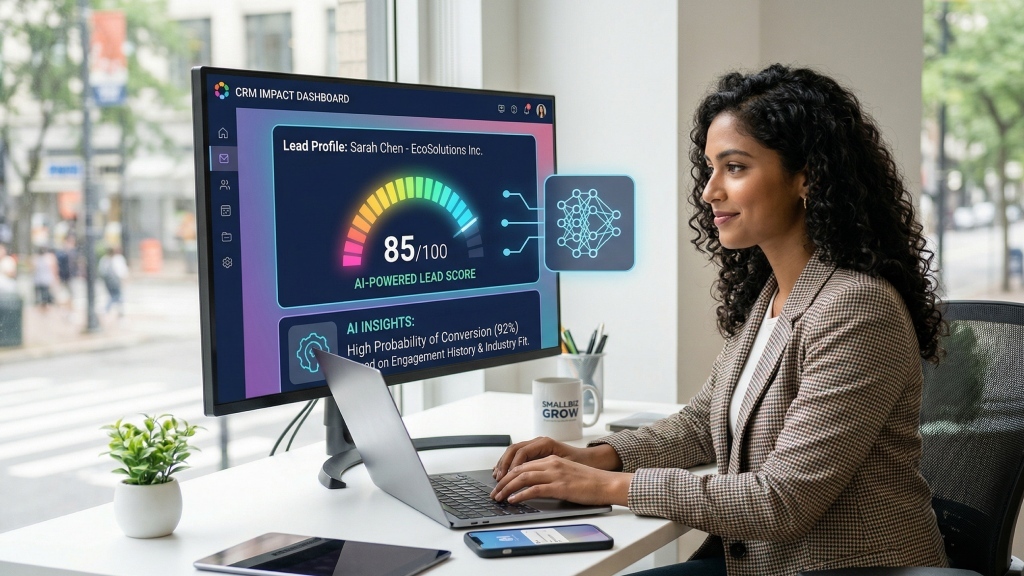
Lead scoring is a method of assigning a score to each potential customer, much like grading. This score reflects how likely they are to buy from your business. A higher score means the person is more interested and ready to buy, while a lower score suggests they are less likely to make a purchase at this time. This helps you decide where to focus your efforts.
In the past, businesses either tried to score leads by hand or simply relied on intuition. Often, someone would feel that a particular lead seemed interested during a call, only to spend weeks following up without any results. This approach is not always reliable and can lead to wasted time.
With AI, this process becomes much more accurate. Instead of guessing, your CRM system can now analyze real data and behaviors to automatically assign scores to your leads.
What does AI actually look at?
AI-powered lead scoring uses practical signals to gauge a potential customer's level of interest. Some of these signals include:
- Did they visit your pricing page?
- Did they open your last three emails?
- Did they fill out a contact form, or just browse?
- How long have they been in your pipeline?
- Do they match the profile of customers who have bought from you before?
All of these signals are combined into a single score. For example, if someone visits your pricing page, opens your emails, and fits the profile of your best customers, they will receive a high score. On the other hand, if someone signed up for a free resource months ago and has not interacted since, their score will be low. This helps you focus on the people who are most likely to buy now.
Why does this matter for small businesses specifically?
Large companies often have large sales teams that can manage hundreds of leads simultaneously. For small businesses, resources are more limited, so it is important to focus on the leads that matter most.
If you are running a small team, whether in solar installation, consulting, or any other service business, your time is valuable. Lead scoring helps you decide where to invest your time for the best results.
For example, if you have 50 leads in your pipeline, AI lead scoring might indicate that 8 are ready for a conversation today. You can focus on these 8 while keeping in touch with the others through automated emails. This way, you use your time more effectively.
How do you get started?
The good news is that many modern CRM platforms already include lead scoring features. You do not need to hire a developer or a data expert to get started. Here are some simple steps you can take:
- Make sure your contact records are complete and up to date.
- Define what a "good lead" looks like for your business — industry, company size, behavior.
- Enable AI scoring on your platform and let it learn from your historical data.
- Set a threshold: any lead with a score above it is added to your active follow-up queue.
Once you set up lead scoring, it becomes a straightforward part of your process. Many business owners find it hard to imagine working without it after seeing the benefits.
The Bottom Line
Losing deals is often not about a lack of effort, but about focusing on the wrong opportunities. Lead scoring helps you work more efficiently by guiding you to focus on the leads most likely to convert.
Want to learn more about how you can plug this into your CRM? Read our “Lead Scoring for Small Businesses: How AI Helps You Focus on the Right People at the Right Time” white paper.
If you're prepared to see how these insights can be tailored to your specific enterprise structure, reach out to our team today for a strategy session.